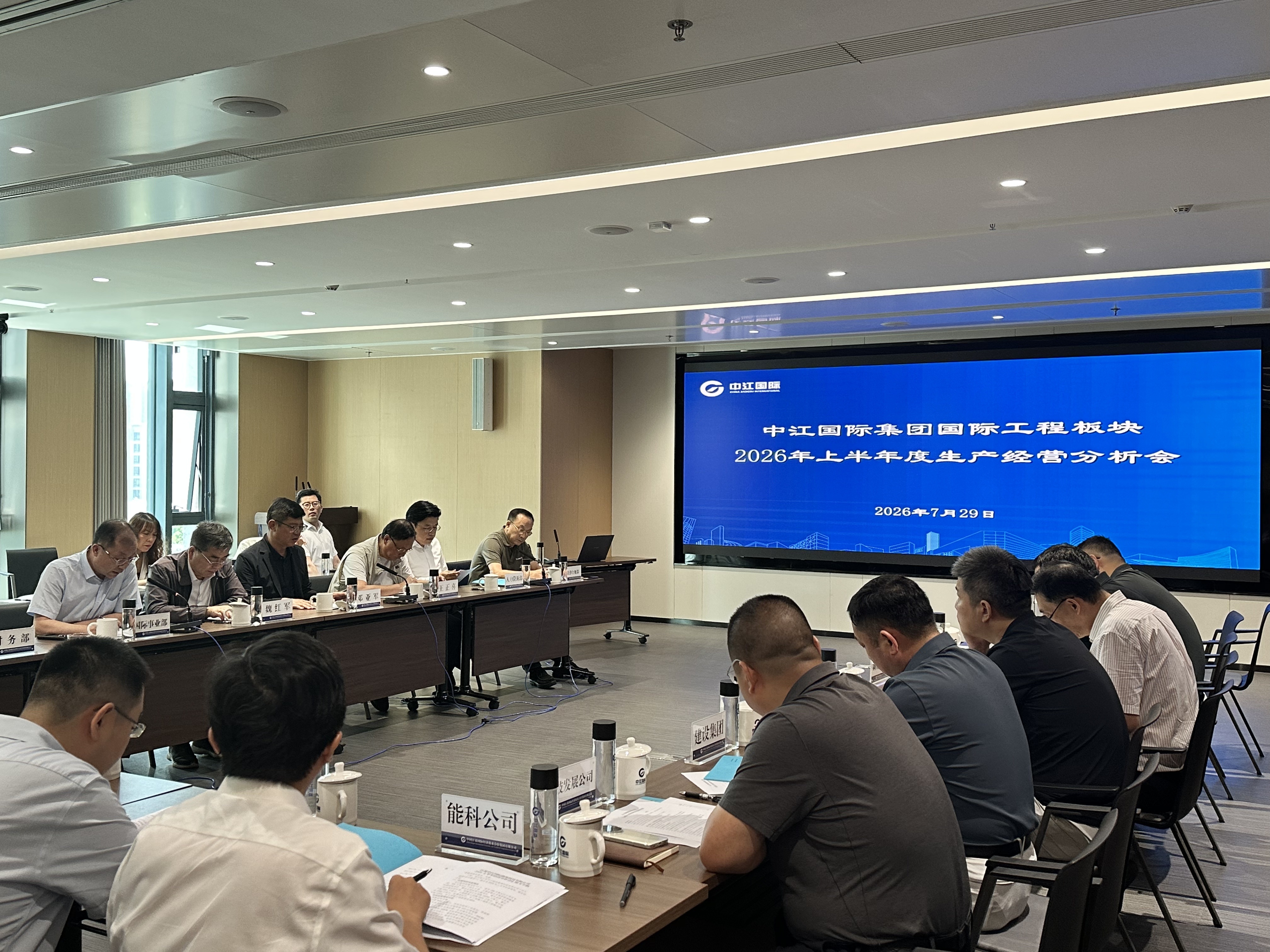

The Group held a production and operation analysis meeting for the international engineering sector in the first half of 2026
On the afternoon of July 29, CJI held a production and operation analysis meeting for the international engineering sector in the first half of 2026. Deng Yajun, deputy general manager of the group, and external directors Wang Zhengxi and Wei Hongjun attended the meeting.
At the meeting, the International Business Department made a comprehensive report on the operation of the sector, the progress of key tasks and development ideas for the second half of the year, and interpreted the sector.“The 15th Five-Year Plan”Guidance on market development. Enterprises affiliated to the sector compare annual operating indicators to conduct an in-depth review of the completion of indicators in the first half of the year, sort out shortcomings, and formulate targeted improvement measures to ensure the implementation of annual tasks. Relevant functional departments at the headquarters have put forward special requirements focusing on financial risk control, overseas compliance and production safety.
At the meeting, the International Business Department also carried out simultaneously“AI artificial intelligence empowers the transformation and upgrading of international engineering and international engineering business”A special questionnaire survey was conducted to collect ideas, measures and priority development directions for artificial intelligence integrated applications and business transformation and upgrading from participants to provide support for the sector's medium and long-term planning.
Deng Yajun affirmed the operating results of the international engineering sector in the first half of the year and put forward four requirements for the next stage of work: First, closely adhere to strategic goals and proactively plan breakthroughs. Each unit should take the initiative to compare the group“The 15th Five-Year Plan”Plan, find your own positioning, and focus on sustainable development in business layout. The second is to change business concepts and practice hard to develop internal skills. It is necessary to abandon the passive order-taking and extensive business model, continue to improve the three core capabilities of corporate governance, operation management and project management and control, and use strong internal skills to empower business expansion and long-term development. The third is to consolidate hierarchical responsibilities and focus on business challenges. Clarify the division of responsibilities between secondary units and national companies. The leadership team of secondary enterprises must think outside of solid thinking, focus on the overall situation for development, and focus on large-scale projects, important customers and business transformation and upgrading. The fourth is to strictly adhere to the bottom line of compliance and strengthen risk prevention and control. It is necessary to effectively enhance risk awareness, strictly adhere to the bottom line of compliance, and ensure the stable development of the group's overall operations. Deng Yajun finally emphasized that all units must closely adhere to their core competitiveness, work deeply in professional advantages and special functional areas, increase efforts to expand new quality businesses, adhere to the principle of doing within their capabilities, working steadily, and taking risks that are controllable and adapted to their own capabilities. Sustainable development path overseas.
Heads of enterprises affiliated to the international engineering sector, heads of relevant functional departments at the headquarters and relevant personnel of the international business department attended the meeting.