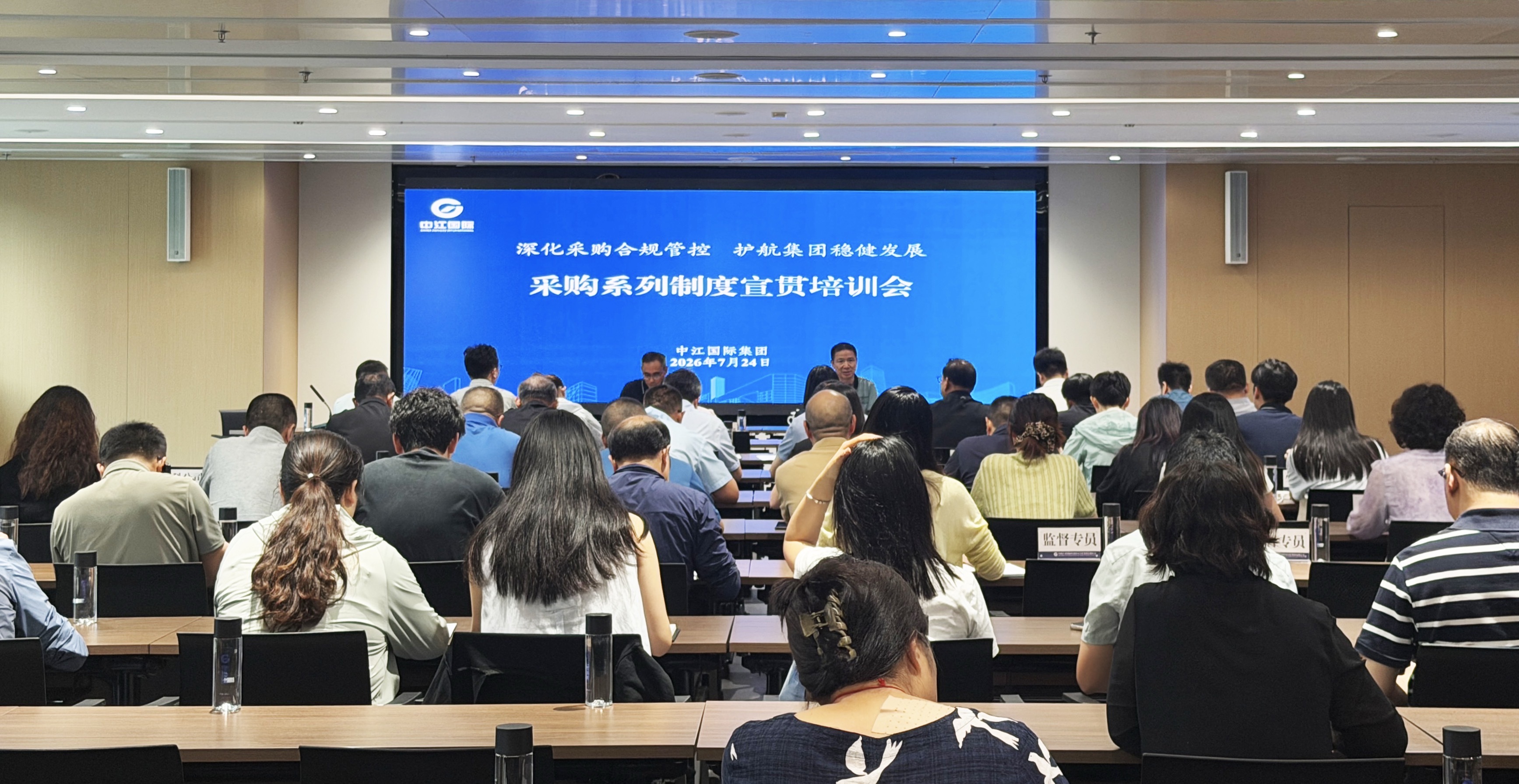

Group Holds Training on Updated Procurement Policies
In order to implement the state-owned assets supervision policy and build a unified and standardized procurement management system, on the morning of July 24, the group held a meeting“Deepen procurement compliance control and escort the steady development of the Group”Training meeting on the publicity and implementation of the new version of the procurement series system. Lu Guilong, deputy general manager of the group, attended the meeting and delivered a speech. Purchasing leaders and business leaders of various departments at the headquarters and secondary enterprises attended the meeting.
At the meeting, the Enterprise Planning and Management Department, the Domestic Business Department, and the International Business Department successively interpreted the Group's first-level procurement management system and the second-level domestic and overseas supporting special systems, conducted detailed explanations around the core update content, and clarified the differentiated procurement control standards for domestic and overseas projects.
Lu Guilong made a concluding speech. He pointed out that this systematic revision of the procurement system is an important measure to benchmark new regulations on superior supervision, rectify pain points in procurement management, adapt to the group's domestic and overseas two-way business layout, and realize the reconstruction and upgrading of the procurement governance system. He asked all participants to raise their awareness of compliance, accurately grasp the six core orientations of unified system control, source governance, hierarchical management, and three-dimensional supervision, and build a solid line of defense for business integrity.
The meeting clarified three implementation work requirements. The first is to carry out learning in layers and full coverage, and each enterprise completes the revision of procurement rules in a timely manner and reports them; the second is to comprehensively carry out self-inspection of existing procurement projects, rectify existing problems in a closed-loop manner, and strictly implement new standards for new businesses; the third is to consolidate management responsibilities and establish a normalized supervision and assessment mechanism.
This training publicized and implemented the content of the Group's procurement system and relevant standards, clarified the boundaries of process control, and provided assistance in standardizing domestic and overseas procurement behaviors, preventing integrity risks, and improving corporate governance capabilities.